Shape-shifting:Race 3D
- 4.0
- Rating
- 100.00M
- Installs
- Free
- Price
 Analysis by App-foxy
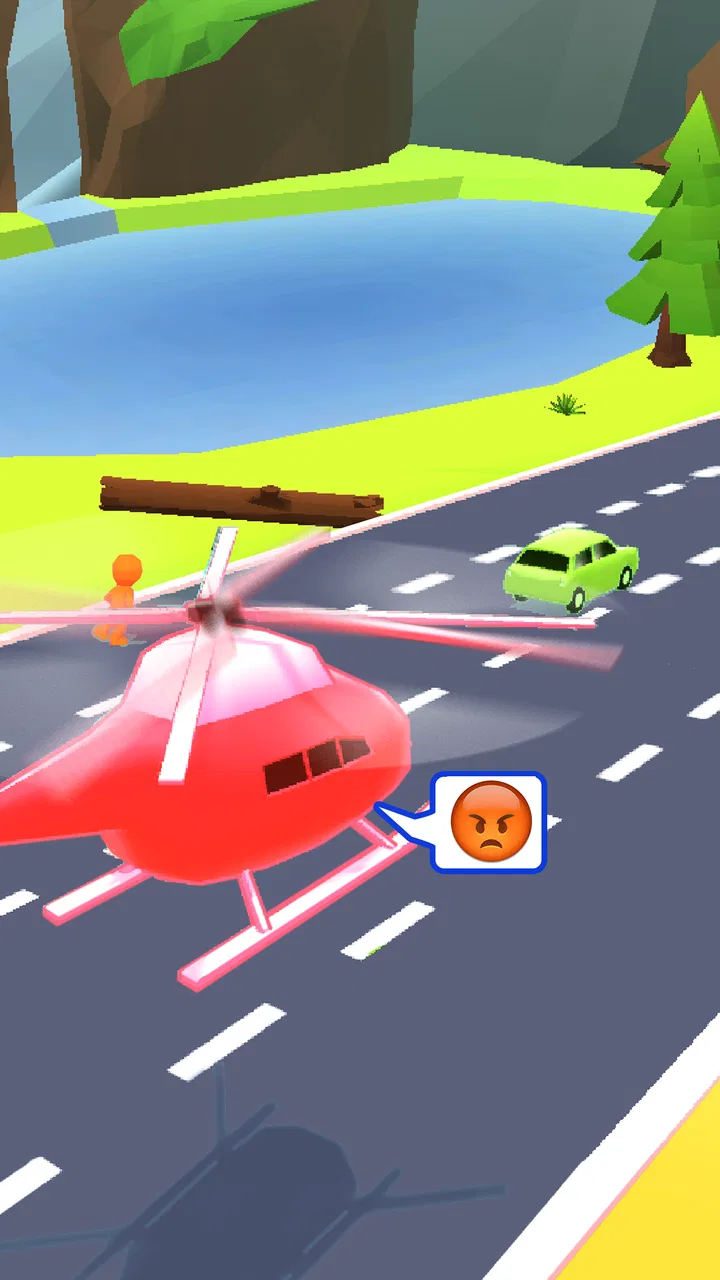
I spent time with Shape-shifting as a quick, reflex-focused racing game, and its central idea is easy to understand within seconds: your form must match the terrain ahead. That simple rule creates a surprisingly active rhythm. I am not steering a detailed car around a long circuit; I am watching the path, choosing the suitable shape, and trying to make each transition before the route punishes hesitation.
That makes it a good fit for short sessions. I can pick it up while waiting for a coffee, play a few attempts, and put it down without feeling that I have abandoned a long race. The game is free, rated for Everyone, and made by Sixcube, so it is clearly aimed at broad accessibility rather than simulation fans looking for realistic vehicle handling. Its store summary describes the basic concept as adapting to different terrains, but the real appeal is the timing pressure that appears once the changes begin arriving close together.
How the basic run feels in everyday play
The first useful habit is to stop thinking of each obstacle as an isolated surprise. I get better results when I look slightly ahead and prepare for the next transformation before the current one is complete. The game rewards that forward attention because reacting only when the terrain is directly underneath me often leaves too little time to change shape comfortably.
You May Also Like

 Blood Strike: 2.5 Anniversary
Blood Strike’s Loadouts Turn Every Drop Into a Tactical Gamble
A close look at Blood Strike’s custom loadouts: how fast access to signature weapons reshapes its battle royale rhythm, rewards preparation, and narrows the gap between fights.

 Pandora - Music & Podcasts
Pandora’s Music Is Easy to Start, but Harder to Recover
Pandora’s strength is its low-effort path from a seed to a station. Its weak spot is how much confidence it asks you to place in connection, setup, and quiet recovery.

 8 Ball Pool
 Is Built on Rivalries, Rematches, and Routine
A close look at the rivalries, rematches, shared routines, and unanswered safety questions that turn a quick pool match into a persistent mobile community.

 Samsung Music
’s Quiet Strength Is Playing What You Already Own
Its reach comes less from spectacle than from dependable access to a personal library. That simplicity is both the app’s strongest retention engine and its ceiling.

 AccuWeather: Weather Radar
AccuWeather Review: A Quick, Clear Forecast for Everyday Decisions
For everyday plans, the best forecast is the one you can understand quickly. AccuWeather makes rain timing, radar, and local conditions easy to act on, with a few trade-offs.

 Hill Climb Racing
Why Hill Climb Racing Still Turns Crashes Into One More Run
A tiny car, a bumpy hill and one more upgrade: Hill Climb Racing keeps resurfacing because its simple chaos makes every near-miss feel personal.
More From Our News Desk
View All News


A typical short session works well during a commute or a spare break. I start with the intention of playing one run, fail because I changed too late, and immediately understand what the mistake was. That quick feedback is one of the strongest parts of the design. There is little setup, no complicated control scheme to learn, and no need to remember a large collection of racing rules before the game becomes enjoyable.
The controls are best approached with small, deliberate movements. I found that frantic tapping is less useful than watching the next section and making one confident change. When the path becomes busy, the temptation is to react to every visual detail. A calmer approach works better: identify the required form, change once, then return attention to what is coming next.
This is also where the game differs from conventional racing alternatives. A kart racer usually asks me to manage steering, speed, drifting, items, and opponents. A driving simulator asks for patience and control over a vehicle with believable weight. Shape-shifting removes most of that complexity and concentrates the challenge into recognition and timing. If I want competition against human players or a realistic sense of driving, I would choose something else. If I want a compact reflex game that can be understood immediately, this is more suitable.
One practical tip is to use the early part of a run as a calibration period rather than chasing a perfect result immediately. I watch how quickly the game presents a change, notice whether my first input feels comfortable, and then adjust my attention. This is more productive than repeatedly blaming the controls after every mistake. The challenge is often not the transformation itself but the moment at which I commit to it.
What I watch before trying to improve
I pay attention to three things during a run: the distance between terrain changes, the amount of visual warning, and whether I am looking at the current surface instead of the upcoming one. These details help separate a genuine timing problem from a poor viewing habit. When I miss several changes in a row, I usually find that I have become too focused on recovering from the previous error.
Another useful routine is to treat a failed attempt as information. If I repeatedly fail at the same kind of transition, I do not immediately play faster. I slow down mentally, identify the visual cue that appears before the change, and try to make the input earlier on the next attempt. That repeatable process is more valuable than simply tapping harder or more often.
The game also suits people who enjoy chasing personal improvement without needing a large narrative wrapper. There is a clean satisfaction in recognizing a pattern that previously caused trouble. On the other hand, players who need story progression, character development, or a deep garage of vehicles may find the focused format too narrow after the initial novelty fades.
Settings and device habits worth checking
There is no reason to overcomplicate the setup. Before judging the game, I make sure the display is comfortable, the device is held securely, and notifications are not likely to interrupt a run. Because the action depends on seeing the terrain early, glare, a cramped grip, or a distracting pop-up can affect performance more than expected.
I also recommend checking the available in-game options when first installing it, even if the menu looks simple. The important point is not to assume that a setting will transform the game into a different experience. Instead, I look for anything that affects sound, vibration, or the general comfort of a session. Some players prefer feedback that confirms an input, while others find it distracting during rapid transitions.
For a short game like this, sound is a personal choice rather than a requirement. I can play quietly when I am in a public place, but audio feedback may help some players notice the rhythm of a run. If I am using it as a quick break game, I usually keep the experience unobtrusive. If I am practicing seriously, I remove as many outside distractions as possible and focus on the changing path.
It is worth remembering that the current version is 2.3.5 and the game supports devices running Android 7.0 or later. That makes it accessible to people using older compatible Android hardware, although actual comfort can still depend on screen size, touch responsiveness, and general device condition. A smaller display may make the upcoming terrain harder to read, while a larger one can make visual changes easier to anticipate.
The game is free to install, with in-app purchases listed at $2.99 per item. I treat that as a reason to decide early whether the free experience already meets my needs. For me, the core test is simple: can I enjoy several sessions without feeling pressured to buy anything? If yes, the free entry point is useful. If a player dislikes any game that includes optional purchases, that preference should be considered before spending time with it.
Because it carries an Everyone age rating, it is approachable for a wide audience. That does not mean every player will enjoy the same level of repetition. Younger players may appreciate the direct visual rule, while adults may prefer it as a low-commitment reaction challenge. The best setting is the one that keeps the screen readable and the session free from interruptions, not one that promises to remove the need for practice.
Small adjustments that improve consistency
I keep my thumb or finger in a predictable position instead of changing grip from attempt to attempt. This sounds minor, but consistent hand placement makes it easier to judge when a change is late. I also avoid playing while walking or handling another task. The game is simple enough to start casually, yet demanding enough that divided attention quickly turns into avoidable mistakes.
Another useful habit is to separate learning sessions from score sessions. During learning, I focus on identifying the transition that causes trouble. During a score attempt, I avoid experimenting and follow the timing that has already worked. Mixing those goals can make a run feel confusing because I am simultaneously testing a new response and expecting a clean result.
Faster patterns for repeat players
Once the basic controls feel natural, improvement comes from reducing unnecessary decisions. I try to recognize the required shape as soon as the terrain becomes visible, then make the change before the last safe moment. The goal is not to rush every input. It is to remove the pause between seeing the answer and acting on it.
A strong pattern is to scan in pairs: current terrain and next terrain. Looking only at the immediate surface may produce a correct change but leave me unprepared for the following one. Looking too far ahead can also be a problem because I may neglect the change that is already due. The most useful balance is a short, repeatable visual sweep that keeps both the present and near future in view.
I also try not to overcorrect. If the game accepts a transformation with one input, additional taps do not necessarily make the result safer. Repeated inputs can become a source of confusion, especially when I am already under pressure. One of the more valuable lessons from repeated play is that restraint is a skill here. The fastest response is often the cleanest response, not the busiest one.
For players who enjoy practicing, a good routine is to repeat the same early sequence until it feels automatic, then concentrate on the first point where the run becomes unpredictable. This builds a reliable opening without pretending that every later section can be memorized. It also makes progress easier to notice: instead of vaguely feeling that a run was better, I can identify which transition I handled more confidently.
There is a trade-off between speed and visual certainty. Acting early gives more room for correction, but acting before I have properly read the terrain can create a different mistake. I prefer a slightly early response based on a clear cue rather than a rushed guess. That distinction matters because the game can make impatience feel like bravery when it is really just incomplete information.
Compared with endless runners, this game gives me a more specific decision to practice. Endless runners often emphasize jumping, sliding, lane changes, or collecting objects while the environment keeps moving. Shape-shifting has a narrower vocabulary, but that narrowness makes its timing easier to study. Compared with traditional racing games, it is lighter and less social, yet it is quicker to restart and easier to understand without a tutorial-heavy commitment.
The game is especially effective for people who like “one more try” loops. A failed run does not require a long loading process or a complex preparation stage. I can immediately test whether an earlier transformation solves the problem. That short distance between failure and another attempt is important because it keeps the lesson fresh.
When faster play stops helping
There is a point where trying to play faster makes performance worse. I notice this when I begin changing shape before I have identified the terrain, or when I stop looking ahead because I am concentrating on maintaining a streak. At that stage, I return to the basic workflow: read, choose, change, and scan forward.
I also avoid turning every session into a test of endurance. Since the game is built around quick reactions, fatigue can make the same sequence feel unfair even when my attention is simply fading. Short practice blocks are more useful than forcing a long session after my timing has deteriorated. This is a small but realistic advantage of the format: I can leave and return without losing a complicated campaign state.
Advanced limits and who should choose something else
The focused design is both the game’s strength and its main limitation. Shape-shifting does not try to be a complete racing package. I should not install it expecting vehicle customization, realistic physics, a deep championship structure, or the strategic variety of a full kart game. Its satisfaction comes from mastering the transformation rhythm, so anyone who needs broader progression may run out of reasons to continue.
The same applies to players who want direct competition. A racing game with opponents, rankings, or multiplayer interaction offers a different kind of motivation. Here, my attention stays on the route and my own response. That makes the experience less stressful for some people, but less exciting for others who enjoy blocking rivals, using items, or comparing live results.
The free model is another consideration. I appreciate being able to try the core game without an upfront charge, but optional purchases can still influence how comfortable someone feels with the experience. I would recommend playing enough to decide whether the basic loop is satisfying before considering any purchase. A small transaction does not fix a mismatch between the player and the game’s narrow format.
Performance expectations should also be realistic. The Android requirement reaches back to version 7.0, but compatibility is not the same as identical play quality on every device. Touch response, screen proportions, and general smoothness can affect a reflex game. If inputs feel inconsistent, I would first test the device without other demanding apps running and check whether the issue is environmental rather than a misunderstanding of the timing.
One advanced limitation is that memorizing a successful response can become less useful when the player stops reading the route. I find that the best results come from combining recognition with memory, not replacing recognition entirely. A remembered pattern helps me prepare, but I still need to verify what is actually visible. This keeps the technique flexible instead of turning it into blind repetition.
The game has attracted over 100 million installs and holds a 3.9 average from around 136 thousand ratings, which suggests that its straightforward concept reaches a large audience while still producing mixed personal reactions. I understand that balance. The controls are immediately approachable, but the simplicity that makes the first session friendly may feel limiting to someone searching for a larger racing experience.
For a child or casual player, the direct shape-and-terrain relationship is easy to explain. For an experienced mobile gamer, the appeal depends on enjoying precision and repetition. I would recommend it to someone who wants a compact reflex challenge, a quick distraction, or a game that can be learned without studying a long ruleset. I would skip it in favor of a fuller racing title if I wanted a story, extensive customization, realistic driving, or meaningful interaction with other racers.
My mastery verdict after building a repeatable routine
My preferred way to play is simple: begin with a distraction-free setup, use the first attempts to read the timing, watch one terrain change ahead, and make controlled transformations instead of frantic ones. That routine turns a very small mechanic into a genuine practice challenge. The game does not need a complicated system to create tension; it only needs to make the next decision arrive before I feel completely ready.
The most useful insight is that improvement is less about faster fingers than better preparation. I perform more consistently when I recognize the cue early, keep my hand position stable, and avoid extra inputs. I also get more from each failure when I name the problem precisely: late reading, poor focus, overcorrection, or fatigue. That approach makes the game feel fairer and gives each restart a purpose.
At the same time, I would not oversell its depth. The experience is concentrated, and that concentration will either feel refreshing or repetitive depending on what I expect from a racing game. The Everyone rating, free entry, broad device support, and immediate controls make it easy to try, while the optional purchases and limited scope are reasons to keep expectations measured.
My recommendation is strongest for short, repeatable sessions rather than long racing campaigns. If you enjoy learning a visual pattern, reacting under pressure, and shaving mistakes from a run, this is an accessible choice. If you need rivals, customization, story, or simulation, it is better viewed as a side game than a replacement for your usual racing favorite.
After reviewing it, I see Shape-shifting as a focused mobile game with a clear purpose. It takes the idea of adapting a vehicle to the route and turns it into a compact exercise in anticipation. I would keep it installed for quick breaks and practice sessions, especially when I want something that starts immediately and gives me a clear reason to try again.
FAQs for Shape-shifting:Race 3D
01What is Shape-shifting and what can I do with it?
Shape-shifting is a dynamic puzzle game available for both Android and iOS platforms. In this game, players navigate through various levels by transforming their character into different shapes to solve complex puzzles and overcome obstacles. The app offers a unique blend of strategic thinking and creativity.
02Is Shape-shifting free to download and play?
Shape-shifting is free to download with optional in-app purchases. While the core gameplay is accessible without spending money, players can purchase additional features, hints, or cosmetic upgrades to enhance their experience. This freemium model allows users to enjoy the game without financial commitment.
03What are the system requirements for Shape-shifting?
For Android users, Shape-shifting requires at least Android 5.0 and up, while iOS users need iOS 11.0 or later. The game is optimized for smartphones and tablets, ensuring smooth gameplay across various devices. Adequate storage space is also necessary for downloading and installing the app.
04Does Shape-shifting require an internet connection to play?
Shape-shifting can be played offline, allowing users to enjoy the game without an active internet connection. However, certain features, such as accessing leaderboards or purchasing in-app items, will require an internet connection. This makes it convenient for users who are frequently on the move.
05How does Shape-shifting ensure user privacy and data security?
Shape-shifting is committed to user privacy and data security. The app adheres to standard data protection practices, collecting minimal user data necessary for functionality. Users can review the privacy policy within the app to understand what information is collected and how it is used. Regular updates also ensure security compliance.
Pros
- Intuitive controls enhance gameplay.
- Visually stunning graphics and effects.
- Challenging puzzles keep engagement high.
- Regular updates with new levels.
- Minimal ads for smooth experience.
Cons
- Limited free levels available.
- Some levels require in-app purchases.
- Occasional lag on older devices.
- No offline mode available.
- Difficulty spikes can frustrate players.

Shape-shifting:Race 3D
Gallery